Few takers likely for Trump’s poison pill
As negotiations to end the Iran war continued on May 25, Donald Trump made a series of phone calls in which he pressed key leaders from the Middle East to join the Abraham accords.
The decision by the United Arab Emirates to step away from OPEC marks more than a routine policy shift; it reflects a deeper fracture in the logic that has governed global oil politics for decades.





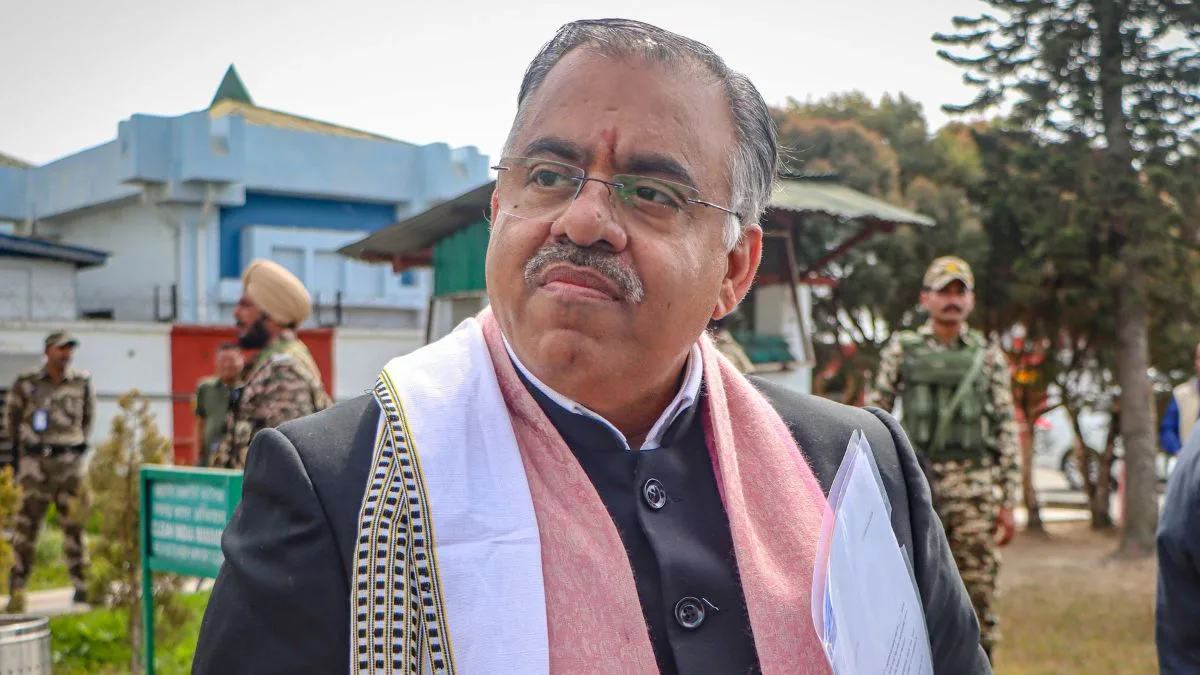
Photo: IANS
The decision by the United Arab Emirates to step away from OPEC marks more than a routine policy shift; it reflects a deeper fracture in the logic that has governed global oil politics for decades. For much of its history, OPEC represented a rare example of sustained cooperation among resource-rich states, enabling them to collectively influence prices and project geopolitical power. The UAE’s departure signals that this model ~ once seen as indispensable ~ is increasingly being questioned by its own members, not just for economic reasons but for strategic and political ones as well.
At its core, the move is about control. The UAE has spent years investing heavily in expanding its oil production capacity, positioning itself as a technologically advanced and efficient producer. Yet, under OPEC’s quota system, it has been required to hold back output to support global prices. This arrangement may have made sense when collective discipline ensured stable and predictable revenues, but in today’s environment it is beginning to look like a constraint.
Advertisement
For a country trying to maximize returns from its existing oil wealth while simultaneously preparing for a post-oil future, limiting production is no longer an attractive bargain. There is an inherent irony here. The UAE’s long-term strategy is to diversify away from hydrocarbons, investing in sectors such as finance, tourism, and technology. However, achieving that transition requires significant capital, much of which still comes from oil revenues.
Advertisement
In that sense, producing more oil now is not a contradiction but a necessity. OPEC’s restrictions, therefore, clash directly with the country’s broader economic ambitions. What once functioned as a stabilizing mechanism is now perceived as an obstacle to national development. But economics alone does not explain the timing or the tone of this decision. The geopolitical context is equally important. The Gulf region has been under strain, particularly with tensions involving Iran and disruptions around critical maritime routes like the Strait of Hormuz. For the UAE, these developments have underscored the risks of relying on a consensus-driven organization where responses to crises are often slow and diluted by competing interests.
In a volatile environment, agility matters more than coordination, and OPEC’s structure is not designed for speed. Frustrations have also been building within the Gulf Cooperation Council. The UAE has increasingly sought a more assertive regional stance, particularly in relation to Iran, and has been dissatisfied with what it sees as a lack of unified action. This divergence in strategic outlook has contributed to a sense that traditional alliances are no longer delivering the desired outcomes. In such a scenario, breaking away from a Saudi Arabia-dominated framework like OPEC becomes not just an economic choice, but a political signal.
For Saudi Arabia, the implications are significant. As OPEC’s de facto leader, its influence has always depended on both its own production capacity and the willingness of others to align with its policies. The UAE’s exit weakens that alignment. It removes a key partner with substantial spare capacity, making it harder for the group to manage supply effectively. More importantly, it exposes underlying dissatisfaction with Saudi leadership, raising questions about how cohesive the organization really is. This comes at a particularly challenging time for Saudi Arabia.
Its ambitious economic transformation plans require sustained high oil revenues, which in turn depend on carefully managed supply levels. If fewer countries are willing to participate in coordinated cuts, the burden falls disproportionately on Saudi Arabia itself. Cutting production to support prices becomes more costly and less effective when others are free to increase output. The result is a strategic dilemma: maintain discipline and sacrifice market share, or abandon restraint and risk price declines. The UAE’s departure also highlights a broader issue that has long plagued OPEC – uneven compliance. Several members have frequently exceeded their production quotas, undermining the credibility of the system. For countries that adhere to the rules, this creates resentment and erodes trust. The perception that the system is neither fair nor enforceable weakens the incentive to remain within it.
In that sense, the UAE’s exit is not an isolated event but part of a larger pattern of dissatisfaction. Looking ahead, the question is whether this move will trigger a wider unravelling. Other producers with growing capacity or shifting economic priorities may begin to reassess the value of membership. If more countries choose autonomy over coordination, OPEC’s ability to function as a cohesive bloc will diminish. Its influence on global oil markets – once formidable – could gradually erode, replaced by a more fragmented and competitive landscape. In the short term, the impact on oil prices may be limited. Geopolitical disruptions and existing supply constraints continue to shape market dynamics, and a single country’s policy shift is unlikely to cause immediate upheaval.
Over the longer term, however, the implications are more profound. If the UAE increases production significantly outside the constraints of OPEC, it could contribute to downward pressure on prices. At the same time, the loss of a strong coordinating mechanism increases the likelihood of volatility. Prices may swing more sharply in response to geopolitical events, demand fluctuations, or shifts in production strategies. For oil-importing countries, this presents a mixed picture. On one hand, increased supply and potential price declines offer clear benefits, easing inflationary pressures and improving trade balances. On the other hand, greater volatility complicates economic planning and energy security.
The absence of a stabilizing force like a cohesive OPEC makes the market less predictable, introducing new risks even as it creates new opportunities. What is perhaps most striking about the UAE’s decision is what it reveals about the changing nature of global energy politics. The traditional model of cartel-based cooperation is being challenged by a combination of technological change, shifting demand patterns, and evolving geopolitical realities. Countries are increasingly prioritizing flexibility and national interest over collective discipline. Energy is no longer just an economic commodity; it is a strategic tool, used to navigate a complex and multipolar world. This shift does not necessarily mean that OPEC will become irrelevant overnight. The organization has shown resilience in the past, adapting to crises and maintaining a degree of influence even in the face of internal disagreements.
It may continue to play a role, particularly if key members remain committed to coordination. However, its authority is no longer unquestioned, and its future will depend on its ability to adapt to a changing environment. In many ways, the UAE’s exit is less about leaving OPEC and more about redefining what participation in the global energy system looks like. It reflects a willingness to break from established norms in pursuit of greater autonomy and strategic flexibility.
Whether this approach proves successful will depend on how effectively the UAE can navigate the risks of a more competitive and less predictable market. What is clear, however, is that the balance between cooperation and competition in the oil market is shifting. The assumptions that once underpinned global energy governance are being re-examined, and the outcomes are far from certain. The UAE has chosen to prioritize independence over alignment, betting that the benefits of flexibility outweigh the costs of leaving a collective framework. Others may soon face similar choices, and the decisions they make will shape the future of the global energy order in ways that are only beginning to unfold.
(The writer is Associate Fellow, Manohar Parrikar Institute for Defence Studies and Analyses, New Delhi)
Advertisement